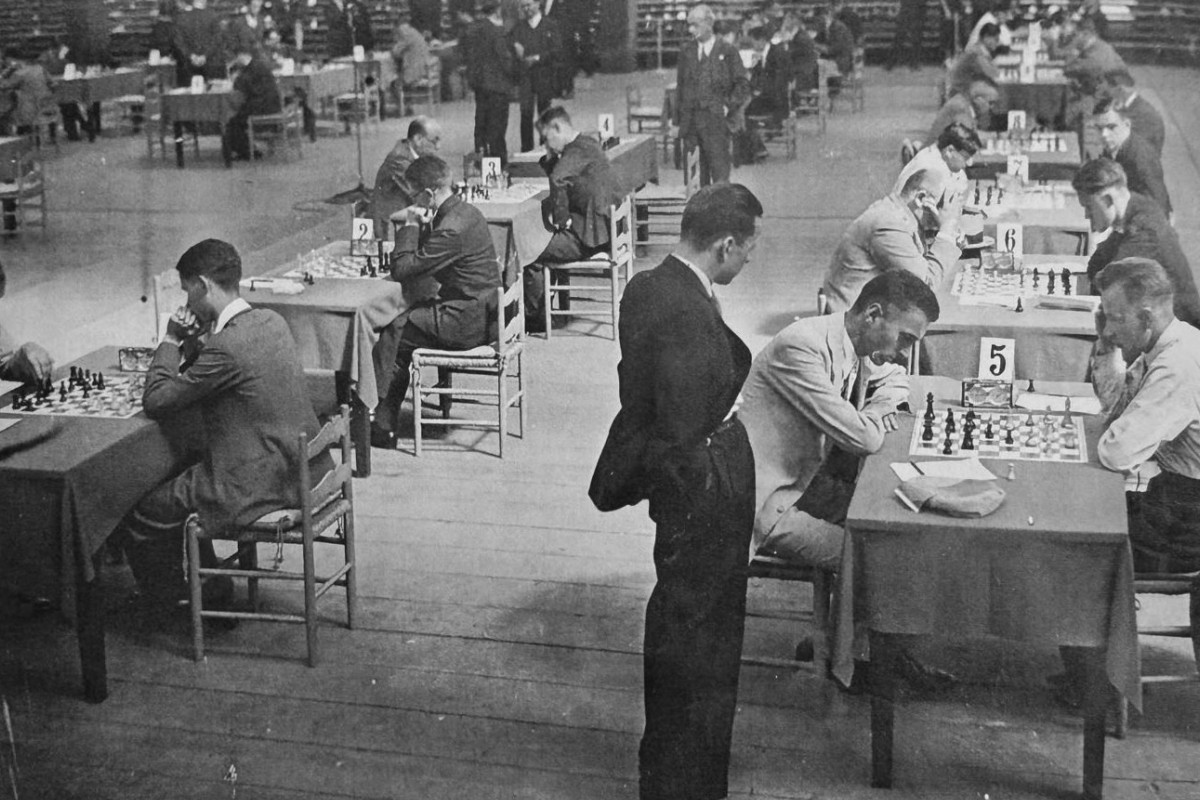
The 1936 Chess Olympiad in Munich: A Controversial Event
The 1936 Chess Olympiad, held in Munich, was a significant event despite not being officially recognized by FIDE. This tournament took place during the Olympic Games and was organized by the Greater German Chess Federation, which had been excluded from FIDE since 1933 due to its racial laws.
As the tournament unfolded from August 17 to September 1, 1936, it attracted 21 nations, slightly more than previous Olympiads. Notably absent were teams from England, Belgium, and the USA. The tournament format allowed for eight boards per team, with two reserve players, and was played as a complete round-robin.
Hungary emerged as the clear winner, achieving victory in all their matches, led by veteran player Geza Maroczy. Poland and Germany followed, with Poland's Najdorf earning individual gold on board two. The event concluded with an awards ceremony, celebrating both the chess tournament and a parallel problem-solving competition.